

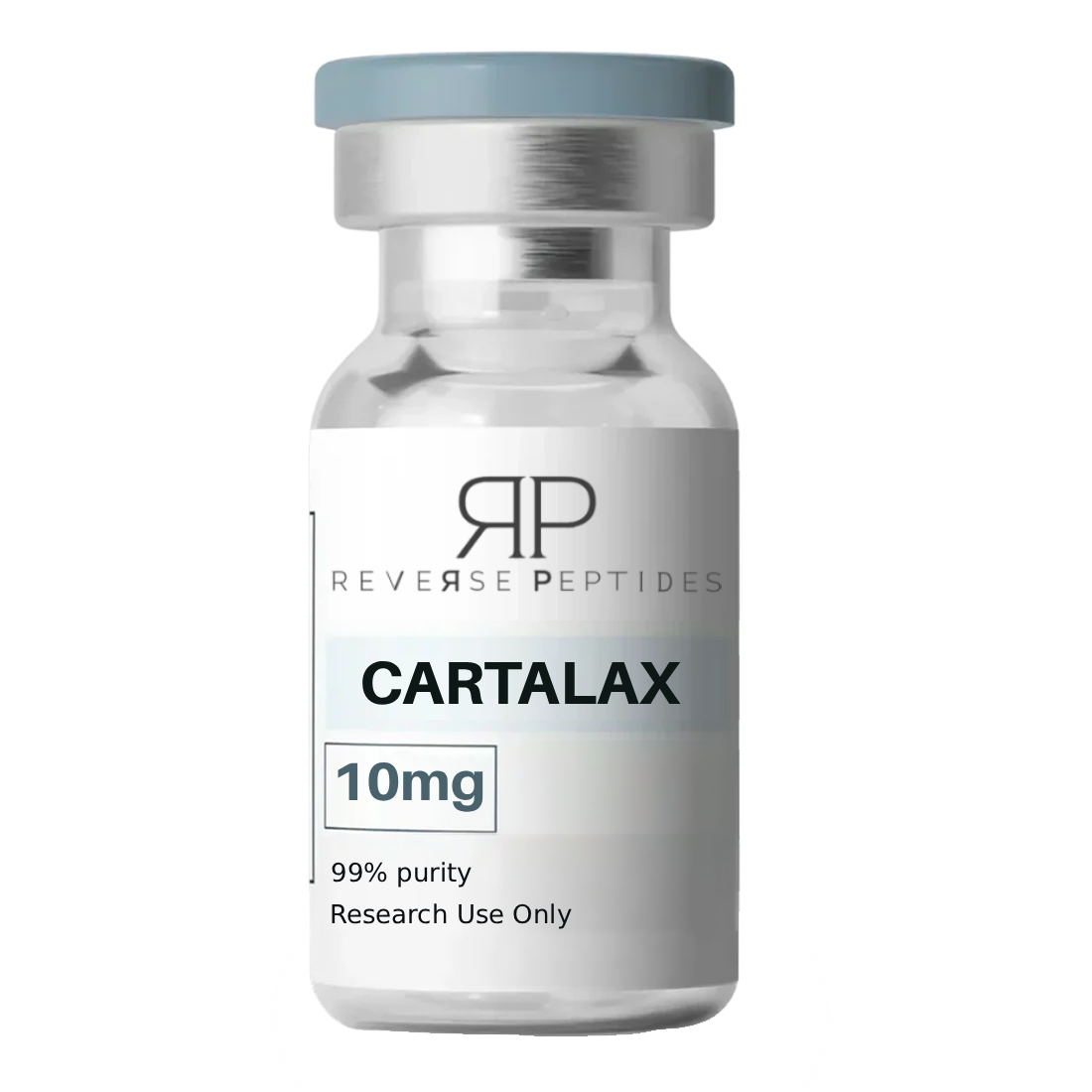
Cartalax 10 mg
Cartalax is a laboratory-grade research peptide chemical derived from cartilage tissue and designed for experimental research. This peptide bioregulator is used in scientific studies to examine mechanisms that control collagen production, tissue architecture, and fibroblast-associated gene expression in controlled laboratory settings.
Description
Overview
Cartalax is a short-chain tripeptide (Ala-Glu-Asp; AED) recognized in preclinical research for its activity in fibroblast systems. In experimental models, it serves as a molecular tool to investigate intracellular signaling, transcriptional regulation, and biochemical markers associated with cellular proliferation, apoptosis, and extracellular matrix remodeling. Its stability and reproducibility make it ideal for in-vitro and in-vivo research applications.
Researchers may buy Cartalax 10 mg online to support laboratory studies exploring connective tissue regulation and peptide-mediated cellular mechanisms.
Research Applications
Cartalax is supplied strictly as a research peptide chemical for laboratory use. Typical research applications include:
- Fibroblast studies: monitoring cellular proliferation, apoptosis, and extracellular matrix responses
- Extracellular matrix modulation: analyzing collagen synthesis, matrix metalloproteinase (MMP) activity, and tissue structure
- Transcription factor evaluation: studying NF-κB, AP-1, and other signaling pathways in experimental stress models
- Preclinical tissue modeling: in-vitro and in-vivo studies assessing peptide effects on senescence-related molecular markers
These studies are intended solely for research and educational purposes and not for clinical or human use.
Purchase & Use
Cartalax 10 mg is available to order online for qualified laboratories, academic institutions, and educational research facilities. For Research Use Only (RUO). Not for human consumption.
References
- Khavinson VK et al., Bull Exp Biol Med, 2002;134(4):356–359
- Anisimov VN et al., Mech Ageing Dev, 1997;96(1–3):123–132
- Linkova NS et al., Biogerontology, 2014;15(2):161–170
You must be logged in to post a review.
Related products
Reviews
There are no reviews yet.