Exploring Nonapeptide 1 for Smooth & Radiant Skin

There was a 458.3% increase in nonapeptide-1 usage in beauty & personal care between 2018 and 2022. Also known as the whitening peptide, nonapeptide-1 was originally researched for treating only hyperpigmentation. It is now a common ingredient in brightening & skin smoothing serums.
Clinicians use research peptides to learn how cells communicate. The nonapeptide-1 is an antagonist, meaning that it blocks a specific signaling process within the skin cell. This ability allows pharmacists to research specific cell signaling mechanisms and individual cell concerns.
Nonapeptide-1: Deep Dive
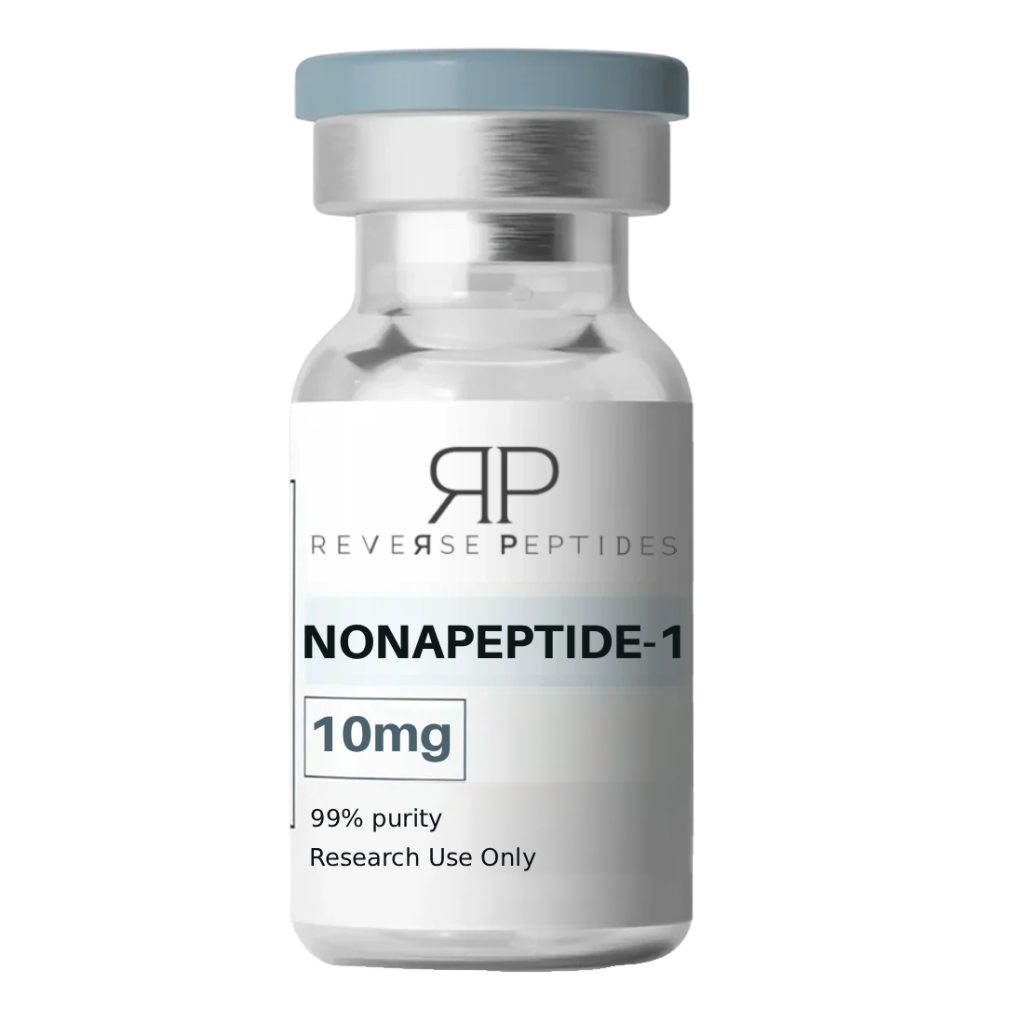
Nonapeptide-1 is a chain of nine amino acids; it was initially formulated for even skin tone and works by binding to the melanocortin-1 receptor, which controls pigment (melanin) production in the skin.
It has been observed under clinical settings to reduce skin color without actually bleaching the skin. It works by blocking the signals that trigger skin cells to produce pigment. As such, it has been increasingly employed to enhance the refreshing of dull skin. The signal to produce melanin is effectively turned off at the onset by the action of nonapeptide-1, resulting in an overall brighter complexion and preventing the production of excess pigmentation.
How Does Nonapeptide-1 Function
Upon exposure to UV radiation, the skin secretes alpha-MSH, which binds to its receptors within the skin to instruct the cells to produce pigment. Nonapeptide-1, however, interrupts this link and effectively blocks the connection, slowing the progression of dark spots as the hormone is prevented from attaching to its corresponding cell receptor. Without the overproduction of melanin to maintain its glow. The skin’s complexion gains the potential to become lighter and more luminous; it is an appealing research opportunity for clinicians.
Assists in Skin Smoothing
The texture of the skin is a frequent concern among aestheticians. Nonapeptide-1 can be incorporated as a base for brightening & skin smoothing serum formulation. Scientists are studying the way that the peptide can affect the general tissue smoothness of the skin.
Uneven skin pigmentation leads to a relatively rougher skin texture that may be interpreted as older skin. By stimulating cell growth that favors uniform color distribution, the peptide works towards smoother visual appearances. Learning how topical chemical peptides affect the physical characteristics of skin is of paramount importance.
Ongoing laboratory research also explores how peptide-based formulations may support healthier-looking skin by enhancing hydration, elasticity, and overall surface refinement.
Recent studies suggest that consistent use of such peptide formulations can visibly improve skin tone and softness over time. Incorporating these peptides into daily skincare routines may contribute to long-term maintenance of a youthful and radiant complexion.
Refreshing of Dull Skin
Environmental stress contributes to skin dullness. For research purposes, dull skin can be characterized as having reduced light reflectivity on the surface. The tired appearance of the skin is due to the inconsistent distribution of pigment.
Studies have explored nonapeptide-1 for its ability to improve skin dullness by regulating uniform pigment distribution. Once cell pigmentation pathways have been influenced, the skin will better reflect light, creating a glow. Researchers measure this glow, or radiance, with highly advanced imaging technology.
Enhancing Radiance Through Science
In the science world, radiance is used to indicate uniformity in the skin’s chromophores, which are the light-absorbing/reflecting parts of the skin tissue. Scientists who are trying to increase radiance will often be targeting hemoglobin, collagen, and melanin at one time, but some target one individual chromophore, such as the melanin utilized by nonapeptide-1, for the purpose of augmenting overall brightness. Nonapeptide-1 is now the leading subject in research involving photo-aging and sun damage.
Nonapeptide 1: Technical Data and Product Specifications
When working with nonapeptide-1, researchers must acknowledge its instability. As with most chemical peptides, the environmental conditions under which it is kept are significant to its preservation. The following specifications are ideal for scientific testing and clinical use:
Molecular Weight: Approx. 1206.3 g/mol
Solubility: Generally, Water or Aqueous Buffers.
Purity: up to 99% tested with HPLC
It is important to be aware of these values in order to be able to calculate the dosage in an experiment. The peptides at Reverse Peptides are known to be provided along with comprehensive technical data that may be of use for researchers.
Peptide Purity Is Non-Negotiable for Research
Quality material is the most essential aspect in scientific studies. Impurities in the chemical can make the study unreadable and irrelevant to the field, thus making studies of nonapeptide-1 and its potential ineffective. This is why researchers will demand 99% pure research peptides, as even slight chemical impurities can alter cell behavior significantly, leading to unreliable data and misleading findings. When working with a manufacturer that ensures that quality peptides are available for your research, you can guarantee that the only variable in your experiment is the peptide.
Importance of Proper Manufacturing
The synthesis process of a nine-amino-acid chain is a complicated one. In order to obtain a nonapeptide-1 with the purest possible form, extensive and rigorous purification procedures must be performed. Quality peptide manufacturing that ensures the nonapeptide-1 you are purchasing will be the same quality bottle after bottle makes reliable, long-term research studies feasible.
Without proper peptide manufacturing, a chemical can differ from one purchase to the next, which can render all experimental results unreliable. This is why leading researchers trust Reverse Peptides. Our chemical peptides are formulated with the highest quality.
Purchasing High-Quality Peptides
When purchasing peptides for sale, it can be an overwhelming endeavor to differentiate one supplier from the next. The key to purchasing peptides is to not get lost in the complex wording; stick to understanding the core components of each peptide. For those who are seeking a peptide for sale to be used in research, understand that it should be of 99% purity tested by HPLC; as is the case with our peptides at Reverse Peptides, we guarantee this to give researchers more time for analyzing results and not second-guessing their suppliers.
All products in our Reverse Peptides catalog, including nonapeptide-1, have been synthesized for scientific research. Reverse Peptides ensures reliable peptide manufacturing for your research. This help to maintain the integrity of your research findings.
Nonapeptide-1’s interaction with melanocortin receptors continues. Its role is now being investigated for effects beyond merely skin lightening. Clinicians continue to discover its vast potential, including its interactions with growth factors, that may make this a vital tool in clinicians’ and researchers’ arsenal.
Explore our full inventory of research peptides today to buy peptides for scientific research. We deliver the high-quality materials needed for cutting-edge studies in any scientific discipline. We supply the necessary chemical peptides needed for professional-level research into skin health and treatments.