





MGF Peptides: FDA May Lift the Restricted Status

Peptide therapy may move from a ‘grey zone’ toward regulated wellness solutions industry. The FDA intends to ensure that researchers and clinicians use only pharmaceutical-grade active ingredients made in compliance with the organization’s manufacturing standards. This shift reinforces that safety and scientific validity remain the highest priority in peptide use.
The Science of Muscle Repair: MGF Peptides
Mechano Growth Factor, commonly known as MGF, is one of the molecules that has gained the attention of researchers worldwide. Researchers are always looking for new ways to understand how biological tissues heal and grow. MGF is a variant of insulin-like Growth Factor-1 (IGF-1). It plays a unique role in how the body responds to physical stress and tissue damage.
MGF is mechanosensitive. This means that the body produces it in response to mechanical load or physical strain. This is exactly why it interests scientists working on research peptides. They focus on how specific sequences can trigger cellular repair. In a lab setting, studying MGF helps clinicians understand the complex pathways of muscle development and cellular longevity
Why are Researchers Fixated on Mechano Growth Factor?
MGF is a splice variant of the IGF-1 gene. Under normal conditions, the liver produces IGF-1 as a systemic hormone. However, when muscle tissue is stretched or injured, the IGF-1 gene is spliced differently. At this time the affected tissue produces MGF locally.
Among chemical peptides, clinicians classify MGF as a potent regulator of satellite cells. These are muscle stem cells that stay dormant until the body generates a repair signal. Research suggests that MGF acts as the wake-up call for these cells. It encourages them to multiply and fuse with existing muscle fibers.
Researchers are particularly interested in MGF because of its potential role in accelerating muscle recovery, supporting tissue regeneration, and improving cellular repair mechanisms after physical stress or injury. Emerging studies also indicate that MGF may help preserve muscle mass and strength during periods of inactivity or aging. Ongoing research continues to explore how targeted MGF therapies could optimize muscle performance and recovery in both clinical and athletic settings.
MGF and the Mechanics of Muscle Repair
The main interest in MGF is because it facilitates tissue repair. When a muscle undergoes intense stress, micro-tears occur. The local expression of MGF triggers a repair sequence. This process helps maintain the structural integrity of the musculoskeletal system.
In scientific studies, MGF has shown the ability to increase the number of satellite cells available for repair. This is different from standard IGF-1, which helps cells mature. MGF focuses on the expansion of the cell pool. By increasing the quantity of repair cells, this peptide provides a foundation for faster recovery.
Hypertrophy and Cellular Growth
Hypertrophy is the increase in the size of cells or tissues. For MGF research, hypertrophy is a key metric. MGF stimulates the proliferation of satellite cells by supplying the raw materials needed for tissue growth. On fusing with existing fibers, MGF makes them thicker and stronger. This is a fundamental aspect of biological adaptation. Scientists use MGF to study how the body can overcome muscle wasting conditions or age-related decline. Research environment maps out these growth pathways for future therapeutic potential.
Research on Recovery and MGF
Recovery is an active biological process that goes beyond rest. During recovery, the body clears out damaged proteins and replaces them with new ones. MGF plays a critical role in this phase.
In research, chemical peptides, such as MGF, proved beneficial in shortening the time needed for tissue stabilization. This further drove clinicians to find out how MGF might protect nervous tissues as well. Some studies also indicate that MGF has neuroprotective qualities, helping neurons survive after injury. This broadens the scope of MGF from just a muscle peptide to a potential tool for systemic recovery research.
Technical Specifications of MGF
In a laboratory setting, MGF is often studied in its PEGylated form (PEG-MGF). Standard MGF has a very short half-life, meaning it breaks down quickly in the body. By adding a polyethylene glycol (PEG) molecule, scientists can extend the life of the peptide. This allows for prolonged observation of its effects on tissue cultures and animal models.
Researchers also need to consider how the peptide is stored and reconstituted. Most high-quality MGF comes in a lyophilized (freeze-dried) powder to maintain its structural integrity until it is ready for use in a controlled experiment.
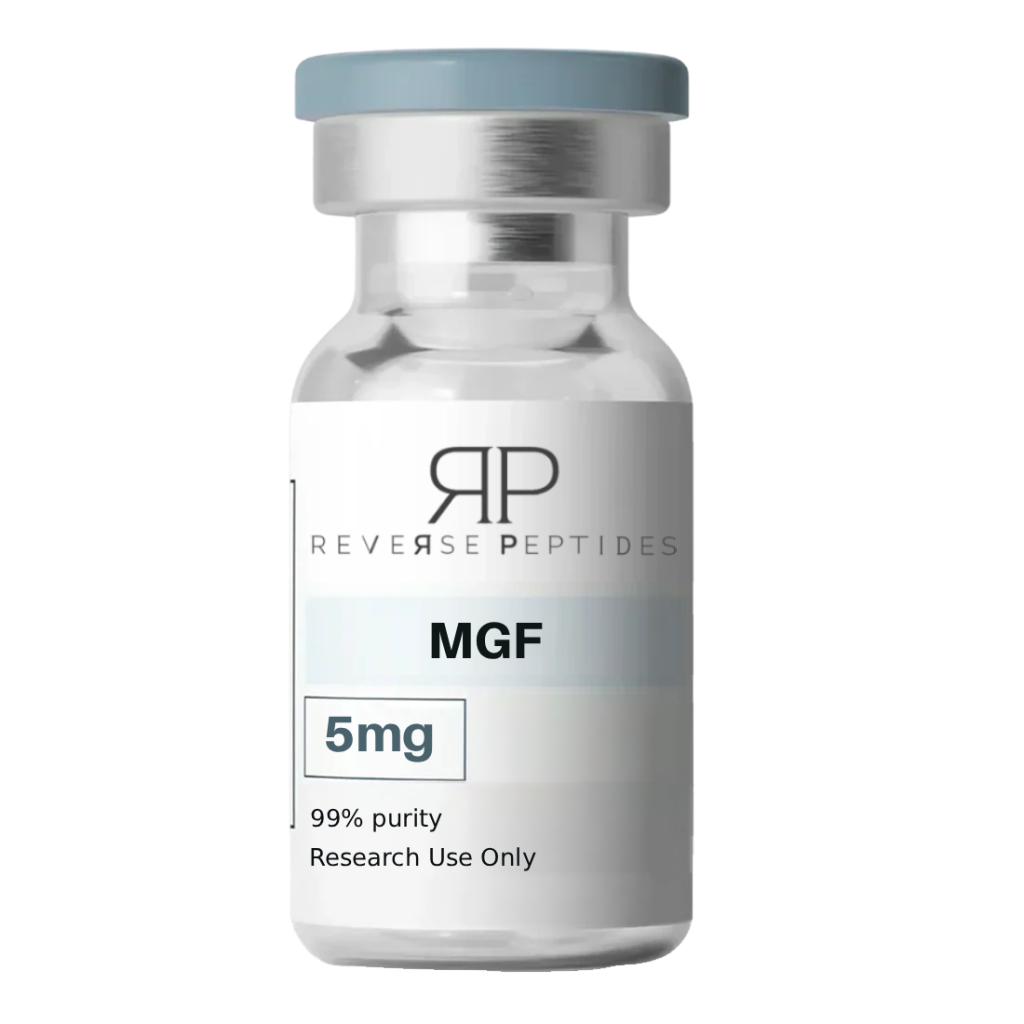
Using 99% pure research peptides is essential for clinical-level studies. Impurities can interfere with the signaling pathways and outcomes, leading to inaccurate data. Compounds high in purity help researchers to observe how MGF interacts with the cellular system without interference.
Quality Matters in Peptide Science
The integrity of a scientific study rests on the quality of the materials. When exploring the effects of MGF on hypertrophy or recovery, even a small amount of degradation can change the outcome. This is why the industry leaders aim to procure 99% pure research peptides. This might also reflect in FDA guidelines, once the July panel reaches a conclusion on whether licensed compounding pharmacies should manufacture peptides.
High purity ensures that the observed biological response is caused by the MGF itself and not by a contaminant. For those looking to buy peptides for scientific research, verifying the analytical reports (such as HPLC and MS) must be a part of the procurement process. These documents confirm the identity and purity of the chemical peptide.
Trust Research Peptides for Your Research Needs
The recognition of peptides as essential tools in modern medicine is growing. For researchers, this means that the work done today could form the basis for future medical breakthroughs. For instance, researchers are investigating how MGF levels change as we age. There’s a hypothesis that the decrease in natural MGF production contributes to sarcopenia (age-related muscle loss). Any developments on this can dramatically change senior-care.
Mechano Growth Factor represents a fascinating intersection of mechanical stress and biological response. Its ability to activate satellite cells and promote tissue repair makes it a cornerstone of research into hypertrophy and recovery. As regulations tighten, the importance of reliable peptide manufacturing for your research cannot be overstated. Laboratory results are only as good as the chemicals used. Sourcing MGF from reputable providers ensures that the data collected is reproducible and significant. Accessing a peptide for sale that meets strict purity standards is the first step toward successful and impactful research. You must also remember that at Research Peptides, all products mentioned, including MGF, are strictly for scientific research purposes. They are not intended for human consumption or clinical use.