




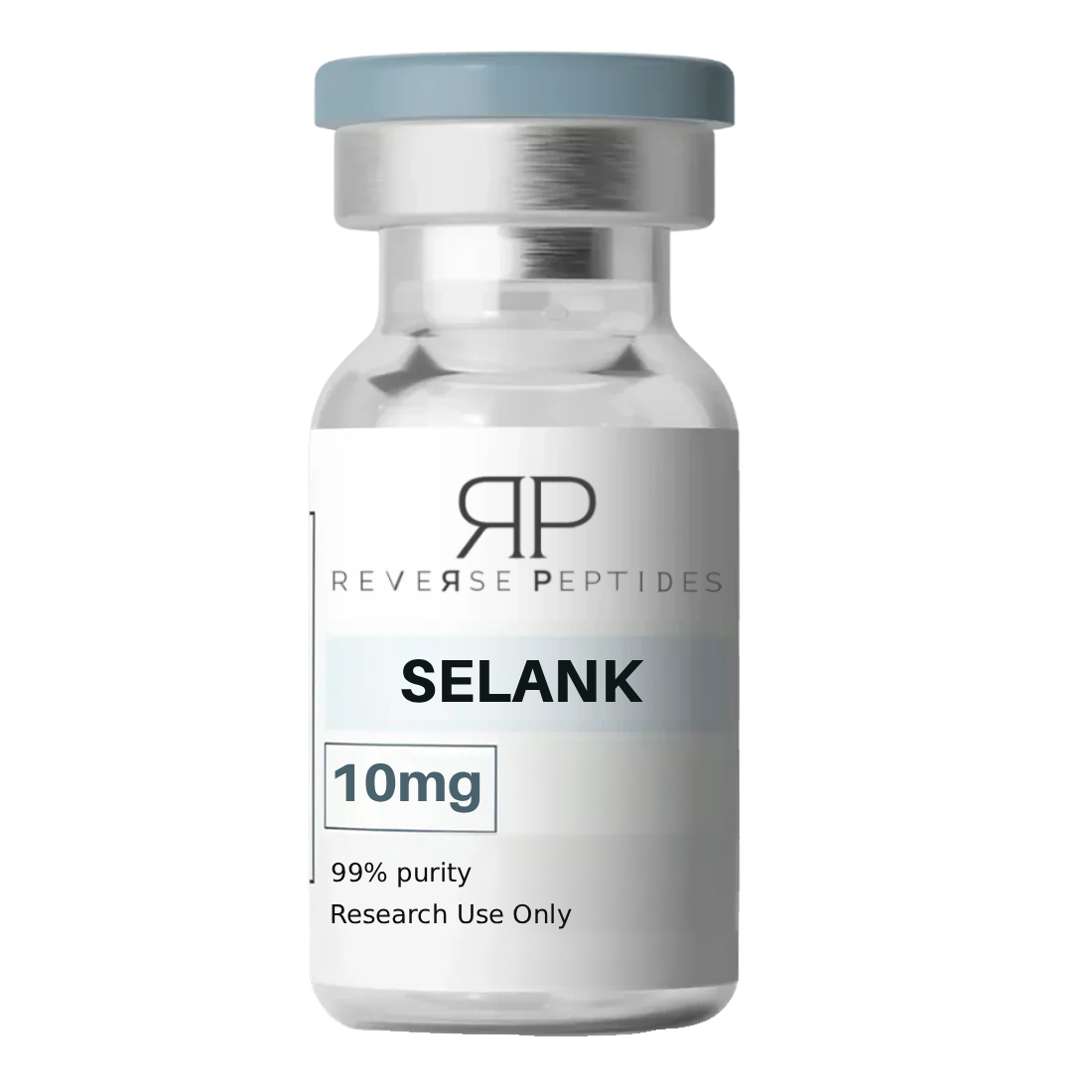
Selank
Selank is a synthetic heptapeptide developed to mimic the biochemical properties of tuftsin in experimental systems. In laboratory research, Selank is used as a molecular tool to explore neurochemical signaling, gene expression regulation, and peptide-mediated modulation of immune and neuroendocrine pathways. Its stability and structure make it suitable for in-vitro and in-vivo studies focused on fundamental mechanisms of neuroimmune interaction.
Description
Overview
Selank is a synthetic heptapeptide developed to mimic the biochemical properties of tuftsin in experimental systems. In laboratory research, Selank is used as a molecular tool to explore neurochemical signaling, gene expression regulation, and peptide-mediated modulation of immune and neuroendocrine pathways. Its stability and structure make it suitable for in-vitro and in-vivo studies focused on fundamental mechanisms of neuroimmune interaction.
Researchers can buy Selank online to support studies requiring reproducible peptide performance in preclinical settings.
Research Applications
As a part of research peptides workflows, Selank is applied in non-clinical laboratory studies to investigate:
- Gene expression profiling linked to neurotransmitter pathways
- GABAergic signaling analysis in rodent or cellular models
- Enzyme activity evaluation related to neuropeptide degradation
- Cytokine and chemokine gene transcription research
- Assessment of peptide stability and receptor-mediated signaling dynamics
These experimental applications are strictly for scientific research and do not imply clinical use.
Purchase & Use
Selank 10 mg is available to order online as a research-use-only chemical for laboratories, academic institutions, and educational research facilities. Researchers looking to buy Selank online should ensure the peptide’s specifications meet their experimental requirements.
References (For Scientific Context)
- Andreeva LA et al., Neurochemical Journal, 2010
- Inozemtseva LS et al., Bulletin of Experimental Biology and Medicine, 2008
- Kolomin T et al., Molecular Neurobiology, 2016
You must be logged in to post a review.
Related products
Recently viewed
Reviews
There are no reviews yet.